
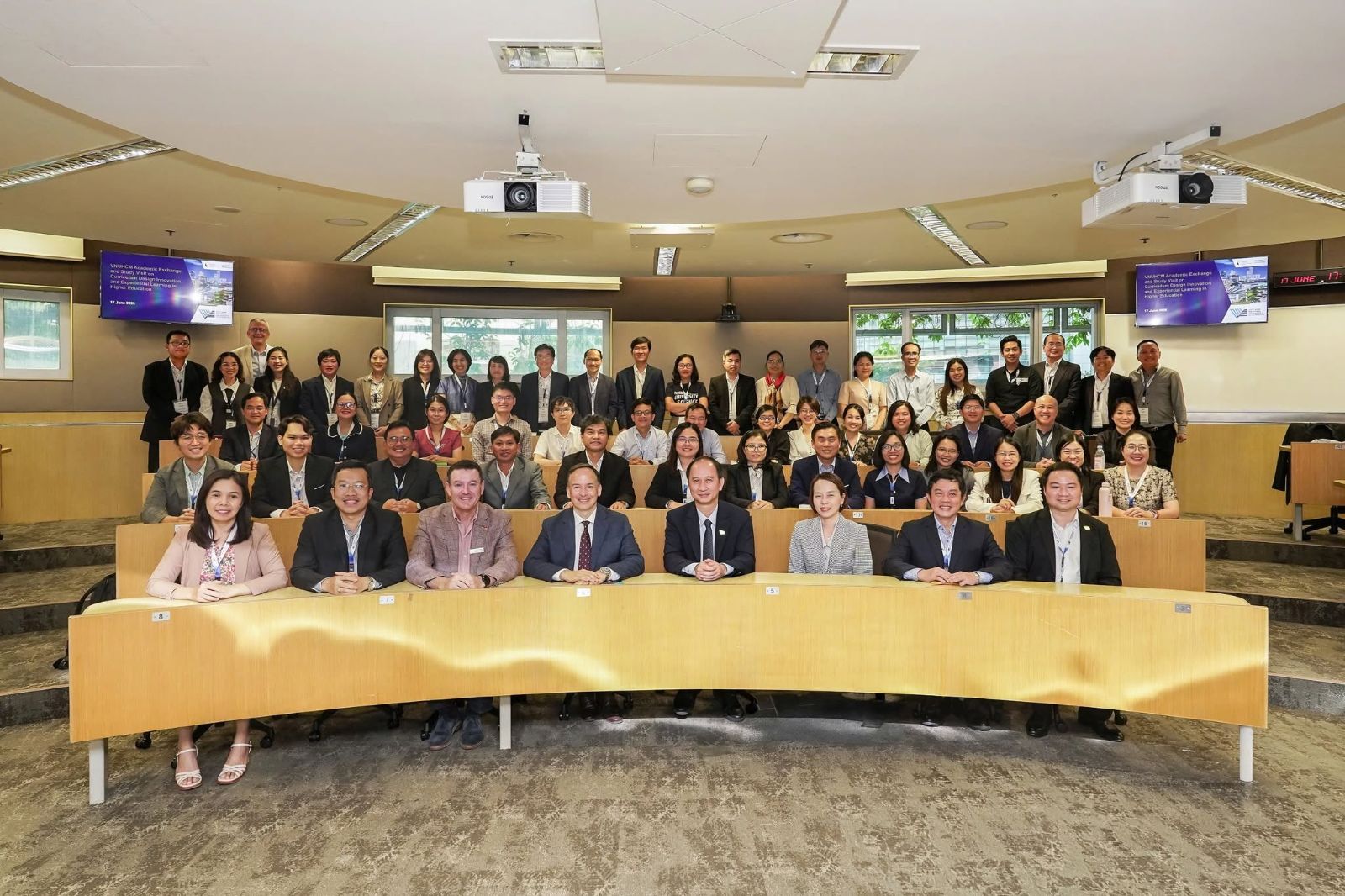
During the programme, SMU shared its strategy for building research partnerships with industry, government agencies, international organisations, and global university partners to promote applied research with meaningful real-world impact. In addition, SMU introduced its interdisciplinary education model at both undergraduate and postgraduate levels, highlighting programme flexibility, integrated learning structures, and the development of students’ ability to address complex challenges in today’s rapidly evolving world.
A key highlight of the programme was SMU’s approach to connecting education with practice through experiential learning, incorporating real-world industry projects into coursework and developing case studies with Asian perspectives. SMU also shared its comprehensive student support ecosystem for internships, career preparation, and employer engagement, as well as its strategy for progressively integrating artificial intelligence into teaching—from foundational AI literacy to the application of AI in learning design, assessment, and discipline-specific problem-solving.
In the final session, SMU further introduced its interdisciplinary and personalised learning model through the Bachelor of Integrative Studies programme and the Common Core curriculum. The university also shared how it measures and communicates its social impact through talent development, the creation of applicable knowledge, contributions to public policy, and support for economic and community development.
Through the programme, the VNUHCM delegation gained valuable practical insights into higher education innovation, interdisciplinary education, experiential learning, faculty development, student support, and university impact assessment. These insights provide useful references for VNUHCM as it continues to innovate its academic programmes, strengthen engagement with industry and society, and develop flexible, interdisciplinary higher education models capable of generating meaningful impact in a rapidly changing context.
Original post: https://www.facebook.com/share/p/17hCexJgHX/