
Tech Central is positioned as "Australia’s innovation engine"—a hub where universities, research institutes, technology companies, startups, venture capital firms, and community connection spaces converge. As Australia's largest and most significant innovation district, it spans approximately 6 $km^2$, supporting an economy of 42 billion AUD and nearly 100,000 workers. The area hosts more than 4,300 businesses, 150 research institutes/centers, and 4 universities, attracting around 160,000 students.During the session, Mr. Matthew Proft introduced the theme of "Accelerating Serendipity." This is the core approach of Tech Central: innovation does not stem solely from isolated labs or companies, but from designing an environment where people, ideas, technology, capital, and market needs intersect frequently, naturally, and purposefully.The presentations emphasized the role of urban spaces in innovation. An effective innovation district must simultaneously combine three groups of assets: economic assets (businesses, universities, research institutes, startups, investors); physical assets (infrastructure, workspaces, transportation, housing, public utilities); and networking assets (networks, events, communities, collaboration programs, and trust between stakeholders). This approach aligns with the international framework for innovation districts, as noted by Brookings, which states that successful districts rely on the integration of economic, physical, and networking assets.The delegation was also introduced to the Tech Central Economic Development Strategy, which focuses on four key pillars: "Work as one" (operating as a unified ecosystem); "Grow the Tech Central economy"; "Attract and foster top talent"; and "Create a vibrant and welcoming destination" (building a dynamic, open, and livable urban destination). This is not just a strategy for a technology cluster, but a strategy for an innovation ecosystem based on the coordination between government, universities, businesses, investors, and the community.A notable point in the Tech Central model is the constructive role of the New South Wales Government. Instead of direct intervention, the government provides strategic direction, creates flexible planning frameworks, aligns city priorities with state and federal policies, allocates financial resources, and integrates transportation, infrastructure, housing, and public space planning to serve the innovation community.For VNUHCM, the visit to Tech Central offered valuable insights for developing its innovation center model linked to "Triple Helix" cooperation. VNUHCM is currently promoting key tasks in science, technology, innovation, technology transfer, startup/spin-off development, and building platforms for commercializing scientific products while attracting businesses into the ecosystem. These tasks align with the orientation of the VNUHCM Innovation Center as a focal point connecting scientists, businesses, investors, and local authorities.Through the visit, the delegation noted a core lesson from Tech Central: to promote innovation, it is not enough to have isolated research programs, investment funds, or workspaces. It is more important to design an ecosystem capable of generating continuous, reliable connections that can transform into projects, products, businesses, and socio-economic impacts.The working session at Tech Central was a significant activity in VNUHCM's mission to learn from Australia’s innovation experiences. It provided a practical foundation for VNUHCM to refine its Innovation Hub model, develop Triple Helix partnerships, and step-by-step build an innovation ecosystem capable of connecting localities, businesses, scientists, and international markets.
Partnerships & Ecosystem
/↳International Partnerships
09/05/2026•VIH - VNUHCM Innovation Hub•3 min read
Promoting the VNUHCM Innovation Ecosystem: Practical Lessons from Tech Central
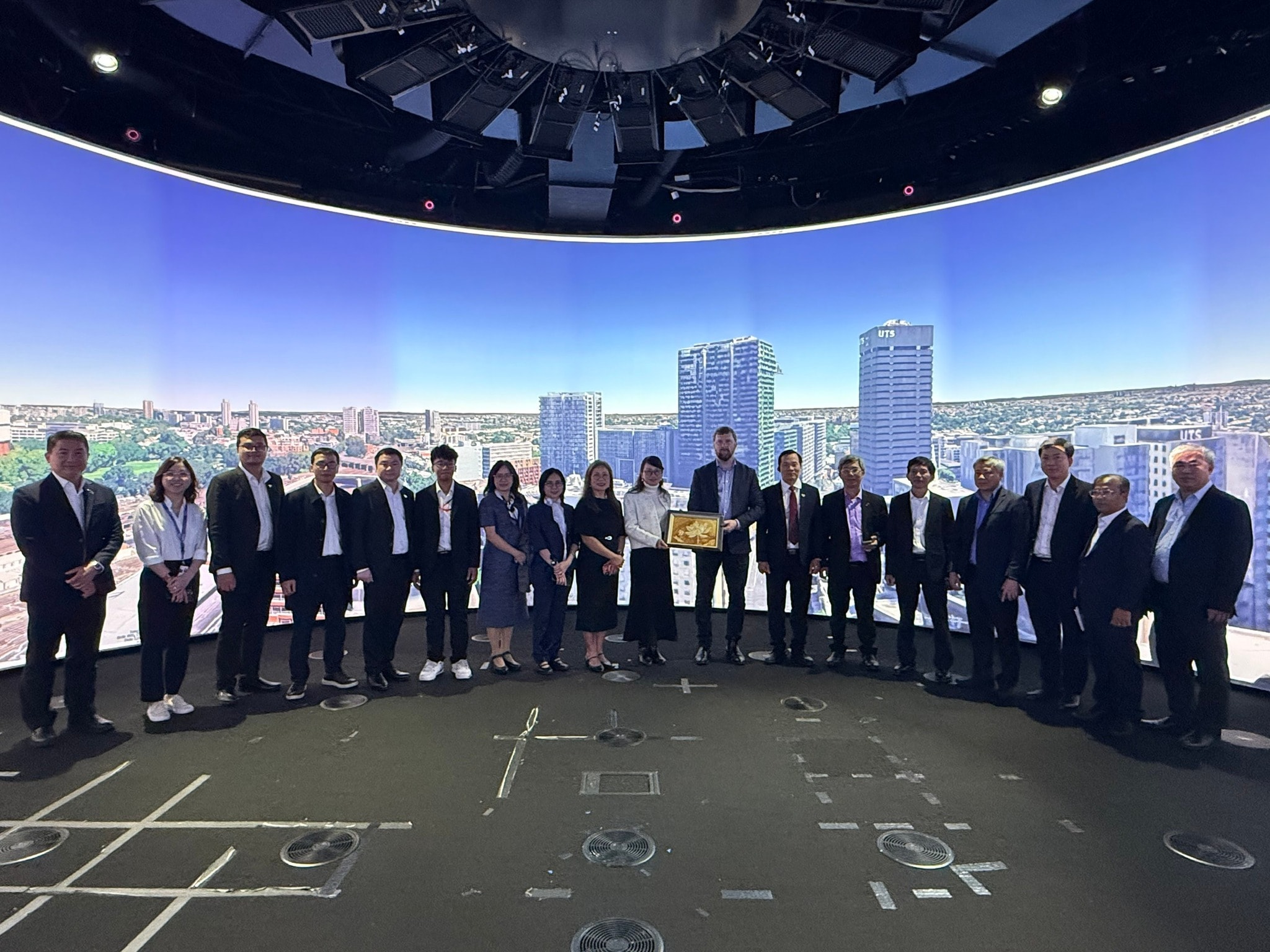
At noon on May 4, 2026, the VNUHCM delegation, led by President Prof. Dr. Nguyen Thi Thanh Mai, visited and worked at Tech Central in Sydney. The program was coordinated by Mr. Matthew Proft, Director of the Tech Central Precinct, focusing on sharing experiences in developing an innovation precinct integrated with universities, businesses, investors, government, and the urban community.
Image Gallery
Hashtags