
During the session, Mr. Phil Callaghan, Chief Operating Officer of Melbourne Connect, introduced the delegation to the precinct's formation model, operational methods, stakeholder connectivity mechanisms, and practical experiences in promoting research commercialization. The discussion revealed that Melbourne Connect is not just a modern physical space, but a deliberately designed innovation platform aimed at bringing university knowledge closer to industry, the market, and the community.
Bridging the "Lab-to-Life" Gap
Melbourne Connect was established in response to a common challenge in Australia: strong academic research capabilities that often struggled to translate into tangible products, services, and socio-economic impacts. Consequently, Melbourne Connect was developed as a strategic solution to bridge the gap between the laboratory and everyday life, between research and the market, and between academic theory and practical problem-solving.
A defining feature of Melbourne Connect is its multi-stakeholder connectivity model, where the university, industry, investors, government, and the community coexist, interact, and co-create new opportunities. Instead of allowing scientists, businesses, and investors to operate in silos, Melbourne Connect facilitates "Serendipitous Collisions" through co-working spaces, accelerator programs, networking activities, testing infrastructure, open events, and commercialization support mechanisms.
Mr. Phil Callaghan emphasized that the success of an innovation precinct stems not from the scale of investment or iconic architecture, but from designing spaces based on the actual needs of the research and business communities. Components such as postgraduate accommodation, an early learning center, fabrication spaces (makerspaces), living labs, smart building data systems, and co-working areas are all organized with a singular goal: creating conditions for people to meet, define problems together, and develop shared solutions.
From "Research Questions" to "Problem Statements"
A notable point of discussion was the distinction between traditional university labs and the applied labs at Melbourne Connect. While many university labs begin with research questions oriented toward academic publication and training, the applied spaces at Melbourne Connect tend to start with a "Problem Statement"—a real-world challenge posed by industry, the community, or society. From this starting point, research teams, tech experts, IP specialists, business developers, and project managers are connected to develop applicable solutions.
Melbourne Connect also places a high priority on supporting scientists in transforming research outcomes into products and enterprises. Programs like Translating Research at Melbourne (TRaM) and various startup accelerators equip research teams with knowledge in business models, intellectual property, legal frameworks, markets, and corporate governance. These are essential competencies often missing in traditional academic training but decisive in the formation of spin-offs, startups, and technology transfer projects.
A "Living Lab" Powered by Data and Art
Melbourne Connect operates as a unique "Living Lab" through an innovative blend of art, history, and AI technology. In the main lobby, the artwork "The Heart"—designed by an artist embedded within the Faculty of Engineering—utilizes archival samples from the former women’s hospital that once stood on the site.
Technically, the precinct integrates 4,600 sensors that monitor everything from oxygen and CO2 levels to foot traffic and energy consumption (sourced from solar and geothermal systems). This data serves as a real-time teaching tool for students in AI, Machine Learning, and Architecture, allowing them to study the operations of a smart building as it happens. This transparency in data and high-tech infrastructure acts as a magnet for diverse partners, ranging from construction software designers and quantum researchers to policy consultants and mental health organizations.
Public-Private Partnership (PPP) and Financial Sustainability
The VNUHCM delegation took a keen interest in the financial operational model and public-private partnerships at Melbourne Connect. The University of Melbourne focuses on academic direction, scientific content, and partner selection, while professional partners invest in, build, and manage the infrastructure. This approach allows the university to maintain its role as a knowledge leader while mobilizing social resources to develop large-scale innovation infrastructure.
Key Takeaways for VNUHCM
The visit to Melbourne Connect offers vital lessons for VNUHCM as it develops the VNUHCM Innovation Center and promotes the Triple Helix model. Key takeaways include:
Designing innovation spaces based on practical needs.
Establishing mechanisms to intake "problem statements" from industry and society.
Building research translation programs and supporting spin-off/startup formation.
Operating the ecosystem through data, events, and community building.
Developing sustainable financial models for innovation infrastructure.
The core message from Melbourne Connect is clear: in the innovation era, a university must not only create knowledge but also organize the mechanisms to bring that knowledge into life. As it aspires to become a leading regional center for training, research, and innovation, VNUHCM has a strong foundation to reference this model in building interdisciplinary platforms and strengthening government-university-industry linkages to create impactful solutions for Ho Chi Minh City and beyond.
Partnerships & Ecosystem
/↳International Partnerships
04/05/2026•VIH - VNUHCM Innovation Hub•4 min read
VNUHCM Delegation Visits Melbourne Connect: Learning from the Model of a University-led Innovation Ecosystem
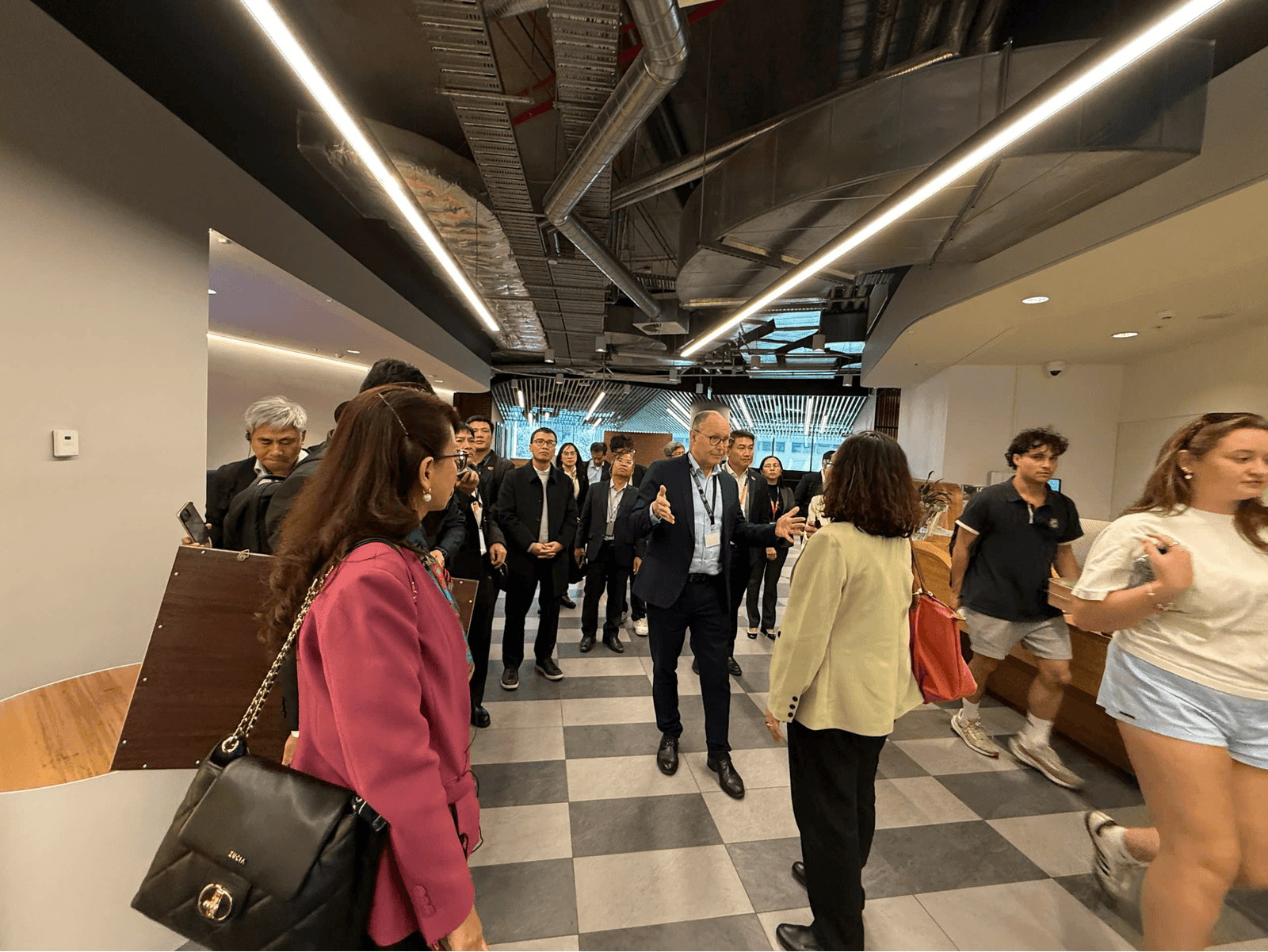
On the afternoon of May 1, 2026, as part of their official mission to Australia, the VNUHCM delegation led by Prof. Dr. Nguyen Thị Thanh Mai visited and worked at Melbourne Connect—one of the premier innovation precincts associated with the University of Melbourne.
Image Gallery
Hashtags