
Speaking at the session, Professor Dr. Nguyen Thi Thanh Mai – Director of VNUHCM – emphasized the urgent need for training high-quality human resources linked to science and technology activities, and acknowledged that the pressure to implement targets is unavoidable. Accordingly, VNUHCM has organized many working sessions with units and directly exchanged ideas with the scientific community; however, reality shows that there is still a gap in understanding and implementation methods between universities. In the new context, these targets require units to simultaneously implement, review, adjust, and coordinate closely. VNUHCM will continue to organize in-depth working sessions, requiring the full participation of leaders at all levels to unify understanding, solutions, and maintain regular exchanges during the implementation process.
Orientation for effective target implementation
According to Professor Dr. Nguyen Thi Thanh Mai, the practical context demands the simultaneous implementation of solutions in training, science and technology, and international cooperation, considering... These are closely linked and inseparable pillars. To secure resources, units must proactively propose specific tasks and projects; funding is only allocated when linked to clear plans and outputs. In the context of limited state budget, VNUHCM is working diligently with ministries and agencies to seek support, while also recommending that units actively explore additional resources from businesses, national target programs, and international cooperation channels.
Regarding the development of research human resources, Professor Nguyen Thi Thanh Mai emphasized the need to promote doctoral training by requiring master's degree holders to pursue doctoral degrees, while proactively recruiting and nurturing high-quality young human resources. Training activities must be closely linked to scientific and technological tasks and specific financial mechanisms, in which doctoral students are supported through research projects and linked to scientific publication targets to ensure full-time study. VNUHCM proposes that units review and reclassify their faculty, relatively separating teaching and research, reducing administrative tasks for research faculty, thereby creating conditions for the development of professional capacity. At the same time, units need to flexibly utilize financial mechanisms from science and technology to compensate for difficulties in postgraduate tuition fees in the context of an unstable budget.
From a systemic perspective, VNUHCM is strongly promoting science and technology activities linked to the practical needs of businesses and localities, through commissioned tasks and interdisciplinary research clusters and series. In addition, VNUHCM aims to develop an innovation ecosystem, forming centers of excellence in fields such as artificial intelligence, semiconductors, biotechnology, energy, etc., with the participation of scientists throughout the system to concentrate resources and enhance academic standing.
Regarding internationalization and enhancing competitiveness, The Vietnam National University Ho Chi Minh City (VNUHCM) identifies attracting international students, especially at the postgraduate level, as a crucial factor in university rankings. Units need to proactively develop scholarship policies, expand English-language training programs, promote credit exchange, and foster international cooperation in education. Simultaneously, the system needs comprehensive solutions regarding infrastructure such as dormitories and initial living expense support to attract international students. In parallel, VNUHCM is also researching the establishment of research and training support funds to mobilize additional social resources, contributing to improving the quality of postgraduate education.
Addressing difficulties and obstacles in implementation
At the meeting, representatives from VNUHCM's functional departments reported on the implementation of targets. Specifically, after the issuance of guidance forms, member and affiliated units of VNUHCM have incorporated and concretized the assigned targets, and assigned representatives from the Board of Directors and supporting leaders. Responsibilities for monitoring and implementation. Progress reporting is proposed to be conducted monthly to ensure consistency and timeliness.
However, the implementation process has also encountered difficulties and obstacles. In the field of training, the recruitment of postgraduate students, especially doctoral candidates, remains limited; linking training with businesses faces many challenges due to uneven capacity for acceptance, along with difficulties in creating a harmonious timetable between learning and practice. In addition, the English proficiency of learners continues to be a significant barrier.
In the field of science and technology, units reported difficulties regarding the mechanism for assigning project leadership responsibilities to doctoral students, increasing pressure on international publication targets, and growing academic cooperation. Simultaneously, in university governance, promoting practical engagement, such as sending lecturers to businesses or attracting experts from practice to participate in teaching, faces obstacles from regulations related to civil servant and public employee management. Furthermore, the challenge of attracting, recruiting, and retaining leading experts remains unresolved. In addition, regarding finances, the implementation of requirements for doctoral students to participate in long-term academic exchanges abroad, along with tuition fee waivers, still needs further research and balancing.
In conclusion, Professor Nguyen Thi Thanh Mai emphasized the proactive and decisive spirit of the units in implementation, strengthening coordination, and regular exchange with the Vietnam National University Ho Chi Minh City. According to the leaders of VNUHCM, the pressure is not only on the system but also reflects the overall context of the entire country. Therefore, units need to proactively adapt, unify their understanding and actions to gradually achieve the strategic targets that have been set.
News & Events
/↳Ecosystem News
27/03/2026•VIH - VNUHCM Innovation Hub•5 min read
VNUHCM implements strategic development targets for the period 2021-2030, with a vision to 2045.
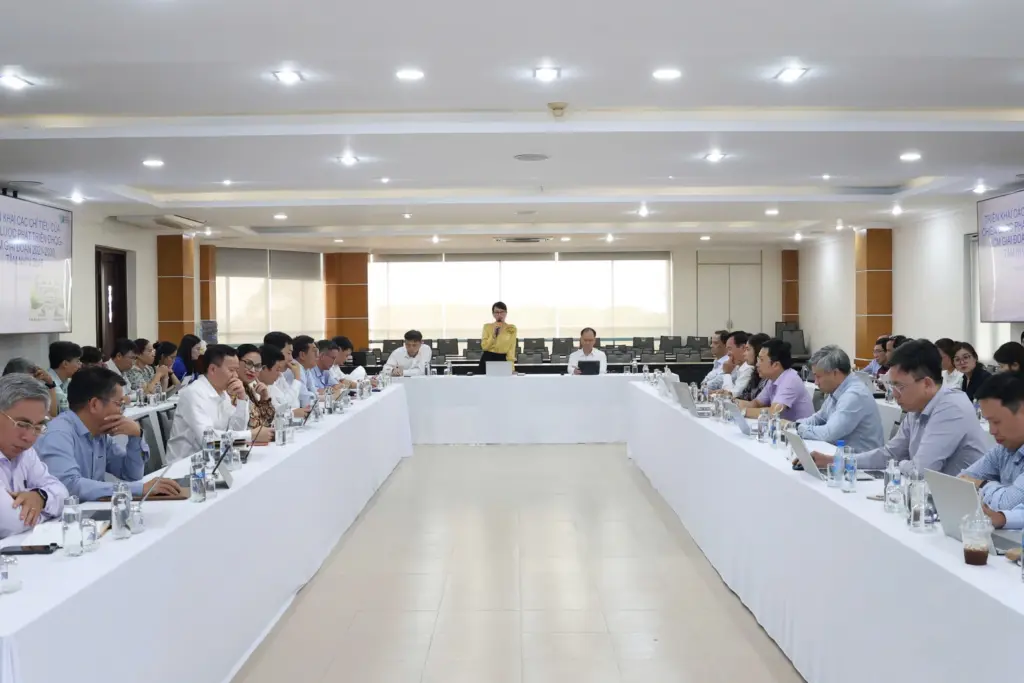
On March 27, 2026, VNUHCM held a meeting on "Implementing strategic development targets for the period 2021–2030, with a vision to 2045," aiming to review progress, identify difficulties, and propose effective solutions for implementation in the future.
Image Gallery
Hashtags